
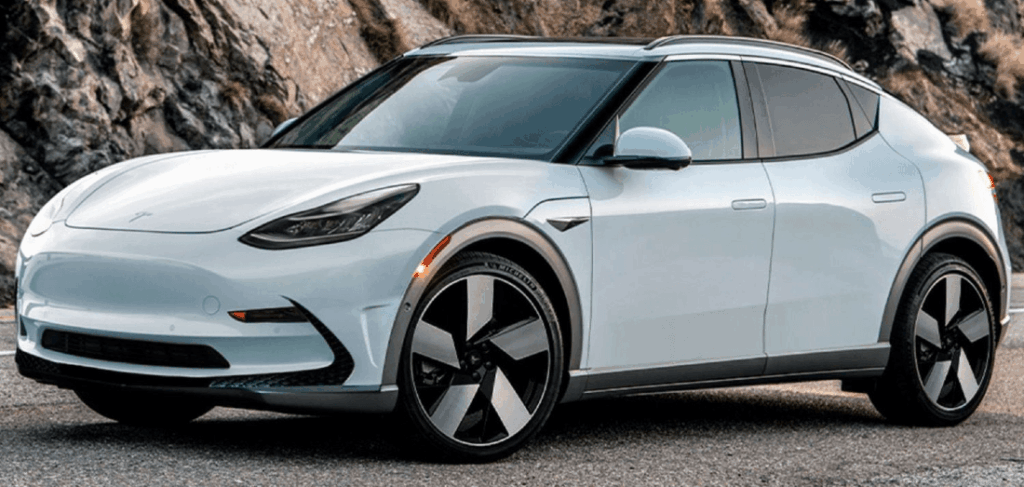
After years of teasing a truly affordable EV, Tesla appears to be circling back to the idea with an all-new compact crossover designed to slot beneath the Model 3 in both size and price. For shoppers who’ve watched cheaper rivals from Hyundai, Chevy, and BYD steal the budget spotlight, this could be the Tesla they’ve actually been waiting for.
- Reuters sources say the new SUV will measure about 14 feet long and weigh roughly 1.5 metric tons
- Production is expected to start at Tesla’s Shanghai plant, with U.S. and Europe added later
- Pricing is targeted well below the Model 3’s $37,000 U.S. starting figure
What the Reports Actually Say
Tesla is developing an all-new smaller, cheaper electric SUV, four people familiar with the matter told Reuters. The automaker has contacted suppliers in recent weeks to discuss details of the plan for the compact SUV, which would be a new vehicle and not a variant of Tesla’s current Model 3 or Y. That last detail matters. The “more affordable” Teslas released last fall were really just stripped-down Model 3 and Model Y variants in new Standard trim levels, the Model 3 Standard at $36,990 and the Model Y Standard at $39,990. Buyers shrugged.
This time, sources describe a clean-sheet vehicle. Two of the sources said Tesla aims to offer the new car at a substantially lower price than its entry-level Model 3 sedan, which starts at $34,000 in China and about $37,000 in the United States. No hard sticker has been floated publicly, but the cost-cutting choices behind the scenes give us a strong hint about where it’s headed.
Size, Weight, and Powertrain Details
Physically, this is a small crossover by any measure. The new model is said to measure about 4.28 meters (168.5 inches) long, making it roughly 0.5 meters (19.7 inches) shorter than today’s Model Y and putting it closer in size to compact crossovers like the Hyundai Kona Electric and Volvo EX30.
To hit a friendlier price, engineering trade-offs are clearly on the table. Tesla planned to save costs in part by using a smaller battery, which would mean shorter driving range compared with the 306 to 327 miles offered by the Model Y. The automaker would also offer a single electric motor instead of two, a performance option on current Tesla models. Tesla also wants to make the car much lighter, at about 1.5 metric tons compared with about two tons for the Model Y. Less mass and a single motor help stretch a smaller battery, so range may not drop as much as the spec sheet suggests.
Why Now, After the Canceled Model 2?
This is the same company that walked away from a similar idea two years ago. The report marks a sharp reversal from Musk’s 2024 decision to kill the $25,000 electric car, codenamed NV9, in favor of the Robotaxi program. At the time, Musk said it would be “pointless” and “silly” to build affordable EVs for human drivers because Tesla would soon have fully autonomous vehicles making traditional car ownership obsolete.
The market disagreed. BYD outsold Tesla by 620,000 battery-electric vehicles in 2025, and the gap grew every quarter. An all-new compact SUV priced below the Model 3 would be a direct answer to that pressure, if it actually gets built. Domestic rivals are biting too. The new Chevy Bolt and Nissan Leaf both start under $30,000.
Catches for U.S. Shoppers
Two big asterisks before anyone gets too excited. First, timing. Three of the people said the new model would be produced at Tesla’s Shanghai factory. The timing remained unclear, but the car’s production is unlikely to begin this year. Most analysts peg a realistic launch window at 2027 or later.
Second, the tax credit. The U.S. federal EV tax credit of up to $7,500 under the Inflation Reduction Act bars vehicles with battery components or critical minerals sourced from Foreign Entities of Concern, a category that includes China. A Tesla built in Shanghai would almost certainly not qualify under current law. A car that stickers at $30,000 before incentives but doesn’t qualify for the credit is functionally more expensive than a domestic competitor that does. That math could change once Tesla shifts production stateside, but early buyers in the U.S. shouldn’t count on a federal discount.
Flexibility Built In
One interesting wrinkle is how this car might do double duty. One source and a Tesla employee said the vehicle could be designed to operate as both a driverless robotaxi and a human-driven car, with optional driving controls for markets where full autonomy won’t receive regulatory approval for years. The employee said preserving the option to build models with or without driving controls could help Tesla keep its factories running near capacity. Translation: same body, two business models.
Should Budget EV Shoppers Hold Out?
If you need a car this year, no. Production hasn’t started, and Tesla has talked about cheap cars before without delivering. But if you can wait, this is the most concrete signal yet that a genuinely entry-level Tesla is back on the roadmap. Watch for supplier news, a reveal event, and any hint that U.S. or European production is being scheduled, since that’s when the price math becomes real for American buyers.

Leave a Reply