
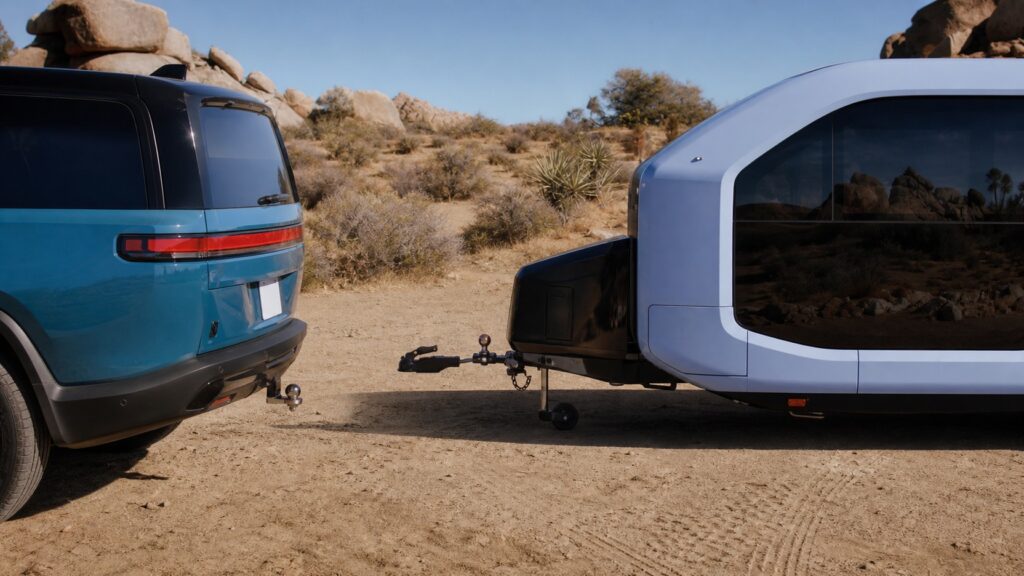
Backing a truck up to a trailer coupler has humbled plenty of confident drivers, and towing a heavy box down the highway has drained plenty of fuel tanks and EV batteries. A new wave of electric trailers wants to fix both problems at once by hitching themselves and pushing their own weight down the road.
- Self-hitching systems let the trailer line itself up and connect with almost no reversing skill required.
- Built-in electric motors let the trailer carry part of its own load instead of leaning entirely on the tow vehicle.
- The payoff is less range loss, easier maneuvering, and a calmer towing experience for everyday drivers.
Why Old-School Towing Wears People Down
Hitching a trailer the traditional way is a two-person job for most of us. One person creeps the truck backward while the other waves their arms and hopes the ball lands under the coupler. Get it wrong and you’re pulling forward and trying again. Once you’re finally connected, the real cost shows up on the road. A big trailer acts like a parachute behind you, and the tow vehicle burns extra energy dragging that weight and fighting the wind. For gas trucks that means frequent fuel stops. For electric trucks it can mean cutting your usable range roughly in half.
That range penalty has been the sticking point for electric towing. You buy a truck with a great range number, hook up a camper, and watch that number collapse. It’s the single biggest reason a lot of would-be adventurers stay hesitant about towing with an EV.
How a Trailer Hitches Itself
The self-hitching idea flips the usual routine. Instead of steering a heavy truck with pinpoint accuracy, you let the trailer do the fine work. Using a phone app or a remote, the trailer can move on its own power, roll toward the tow ball, and align the coupler for you. Some setups handle the final connection automatically once everything lines up. You stand off to the side, watch it happen, and skip the arm-waving entirely.
That same motorized ability helps in cramped spots too. Anyone who has tried to wedge a trailer into a tight campsite or a narrow driveway knows the frustration. A trailer that responds to a handheld remote can pivot and slide into place without a truck attached at all, which turns a stressful ten-minute ordeal into something you can do with one hand.
Motors That Share the Load
The bigger story is what happens once you’re rolling. These electric trailers carry their own battery pack and drive their own wheels, so the trailer contributes power instead of just adding drag. When the trailer pushes along with the tow vehicle, the truck stops working so hard, and that’s where the efficiency gains come from. Drivers towing with electric pickups have reported far less range loss than the usual heavy penalty, because the trailer is essentially pulling its own weight.
Say you’re planning a summer haul up to Lake Wawasee, the biggest lake in Indiana, with a camper full of gear behind you. A trailer that adds its own propulsion means fewer charging stops on the way, more confidence on hills, and a truck that doesn’t feel like it’s straining the whole trip. The onboard battery can also run the trailer’s lights, fridge, and outlets once you park, so you’re not dependent on a campground hookup to keep the food cold.
Is a Self-Hitching Trailer Worth Waiting For
Self-hitching electric trailers are still early and still pricey, so most driveways won’t have one this year. But the direction is clear and it’s a smart one. Taking the guesswork out of hitching lowers the barrier for first-timers, and adding propulsion to the trailer solves the range problem that has scared people away from electric towing. Put those two together and hauling a camper starts to feel a lot less like a chore and a lot more like something anyone can do on a whim. If you’ve been curious about towing but nervous about the hassle, this is the technology worth keeping an eye on as it spreads to more of the market.



Leave a Reply