

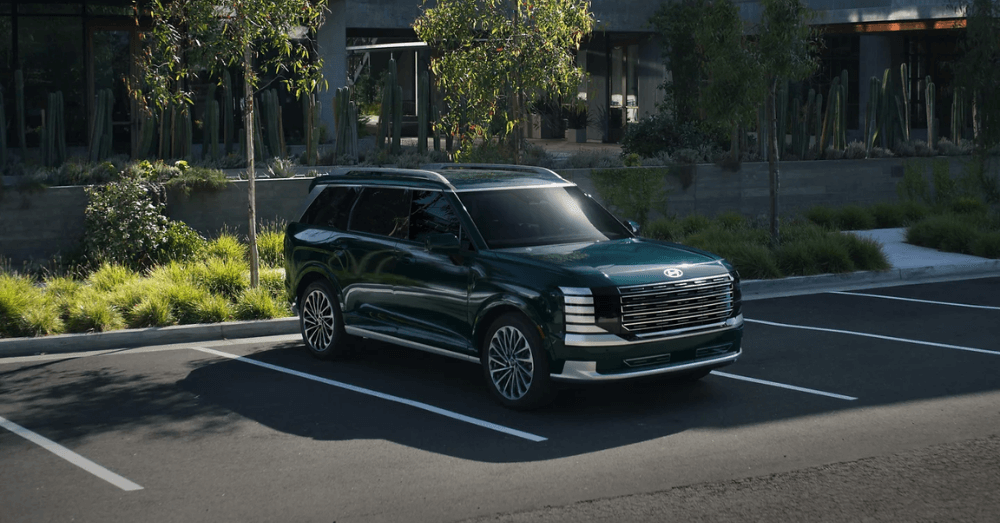
Walk into any Hyundai showroom and you’ll find a three-row SUV that actually works the way you’d expect. The redesigned 2026 Palisade isn’t trying to reinvent how cars work. Consumer Reports bought one for testing and found something unusual these days: a vehicle where the door handles work like door handles, the brakes respond consistently, and your phone connects without a fight. While other brands chase flashy tech features that make driving more complicated, Hyundai built an SUV that families can actually use without reading a manual every morning.
- The 2026 Palisade handles common tasks with surprising simplicity, from connecting your smartphone to adjusting climate controls, while offering luxury-level materials in a spacious three-row layout.
- A newly available hybrid powertrain delivers 329 horsepower and fuel economy ratings up to 34 mpg combined, addressing the previous model’s biggest weakness.
- Starting prices remain competitive at around $40,000, with the top Calligraphy trim reaching approximately $57,000, positioning it well against competitors like the Honda Pilot and Toyota Grand Highlander.
Buttons and Knobs Haven’t Disappeared Yet
Remember when you could adjust the temperature in your car without taking your eyes off the road? The Palisade remembers too. Hyundai kept physical buttons and knobs for the stuff you actually touch while driving. There’s a volume knob that turns like a volume knob should. Climate controls sit right where you’d expect them. The gear selector moved to the steering column, which frees up console space for two wireless phone chargers and proper cupholders.
The twin 12.3-inch screens look modern without getting in your way. Hyundai recessed them slightly into the dashboard to cut down on glare, which seems obvious but apparently needs mentioning these days. Apple CarPlay and Android Auto both work wirelessly now, so you can leave your phone in your pocket or purse.
Space That Actually Fits Adults
Hyundai stretched the wheelbase by 2.7 inches and added 2.5 inches to overall length. That doesn’t sound like much until you sit in the third row. Consumer Reports sent a reporter back there, and he actually fit without his knees touching his chin. Both the second and third rows slide forward and back on power controls, so you can adjust things based on whether you’re hauling people or cargo that day.
The front seats offer what Hyundai calls “Relaxation Seating” with multiple reclining positions. Second-row passengers get the same feature in higher trims. Every row has its own USB-C ports, cupholders, and air vents. When you need cargo space, buttons in the back let you fold the third row flat without crawling inside.
The Hybrid Makes Perfect Sense
Here’s where the 2026 model pulls ahead. The new hybrid pairs a 2.5-liter turbocharged four-cylinder with electric motors to make 329 horsepower and 339 pound-feet of torque. That’s more power than the standard V6, which dropped from 3.8 to 3.5 liters and now makes 287 horsepower.
The fuel economy difference tells the real story. The V6 manages 19 mpg city and 25 highway. The hybrid jumps to 33 mpg city and 35 highway in its most efficient trim. That’s a 619-mile range on the 18.2-gallon tank, according to Hyundai’s math. The hybrid costs $2,200 more than an equivalent V6 model, but you’d make that back in gas savings within five years if you drive 15,000 miles annually.
Tech Features That Actually Help
The Palisade includes a built-in dashcam that records from both front and rear cameras. Most cars make you buy an aftermarket solution and figure out where to mount it. This one’s already there. The center console has a UV-C sterilizer for the storage bin, which sounds gimmicky but makes sense if you’re constantly sanitizing kids’ stuff.
Driver assistance features come standard across the lineup. Automatic emergency braking, adaptive cruise control, and lane-keeping assist all work without being overly aggressive. The system helps without taking over completely, which strikes a good balance for families doing school runs and road trips.
The Styling Gets Noticed
The exterior design changed completely for 2026. Hyundai went with a boxy, confident look that you’ll spot from blocks away. Some reviewers compared it to a Range Rover, which makes sense given the squared-off proportions and upright stance. The wide grille and LED running lights give it an upscale appearance that competes with brands charging much more.
Interior materials feel premium throughout. Even Consumer Reports, which tends to focus on function over form, mentioned that the cabin could pass for a vehicle costing twice the price. The Calligraphy trim offers saddle brown leather that looks particularly good, though you’ll pay extra for that color.
How It Stacks Up
Shopping for used cars or comparing new models in this segment means looking at the Honda Pilot, Toyota Grand Highlander, Kia Telluride, and Mazda CX-90. The Pilot and Grand Highlander offer hybrid versions with better fuel economy, but both cost more upfront. The Telluride shares the same corporate platform but gets its own styling and will see a redesign soon.
The Mazda CX-90 handles better if driving dynamics matter more than space. The Dodge Durango tows significantly more (up to 8,700 pounds versus the Palisade’s 5,000), but it’s also older and thirstier. The Palisade slots into a sweet spot where it does most things well without major compromises.
A Few Things to Consider
The redesign added 411 pounds compared to the previous generation. That weight gain slowed acceleration from 7.6 seconds to 8.8 seconds for the 0-60 mph sprint in the V6 model. It’s not slow, but it’s not quick either. The hybrid should help with that thanks to instant torque from the electric motors.
Pricing crept up too. The top Calligraphy trim now costs over $58,000 fully loaded, which puts it in luxury territory. That’s a big jump for a brand that built its reputation on value. The trade-off is that you’re getting features and materials that justify the price, but it’s worth shopping around to see what competitors offer at similar price points.
Why This SUV Works for Real Families
The 2026 Hyundai Palisade gets the fundamentals right. It seats eight people comfortably, connects your devices without drama, and offers enough space for actual human beings in all three rows. The hybrid option fixes the fuel economy problem that held back earlier models. Hyundai’s 10-year, 100,000-mile powertrain warranty still leads the segment and means you’re covered if something goes wrong.
Consumer Reports will keep testing their purchased Palisade through the year ahead, but early impressions show a vehicle that puts usability first. Sometimes the best car is the one that gets out of your way and lets you get where you’re going. The Palisade does exactly that while looking good and treating passengers well. For families who actually use three rows regularly, that’s what matters most.

Leave a Reply