

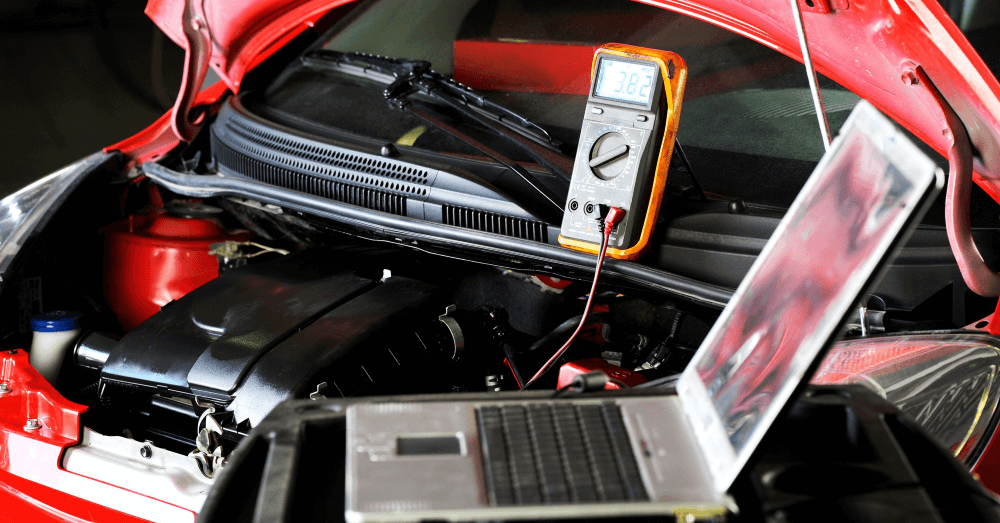
Are the days of owner maintenance coming to an end? Recently, a Hyundai right-to-repair controversy has arisen around something as simple as brake pads.
You bought a Hyundai Ioniq 5 N, took it to the track like the company wanted you to, burned through your rear brake pads, and figured you’d spend Saturday afternoon in the garage swapping them out yourself. Turns out Hyundai had other plans. One owner discovered that the electronic parking brake won’t retract without proprietary software access, which requires a $60 weekly subscription requirement to something called NASTF, a $2,000 interface tool, and get this: you need to register as a business with a tax ID.
The Hyundai right-to-repair controversy has a DIY car maintenance lockout
Even after spending all that money, his account got suspended because the system is only meant for “service professionals.” The whole mess started because modern cars with electronic parking brakes need the system put into service mode before you can fit new pads over the rotors. Older cars had a simple cable you could disconnect, but now everything runs through the computer.
Are electric vehicle repair restrictions necessary?
Hyundai claims this is about safety and security, pointing to their Global Diagnostic System or J2534 application as the official route. But here’s the kicker: dealers use a totally different Android-based tool that works seamlessly, while regular owners get stuck with Windows software that costs thousands and still locks them out. The owner eventually found a Harbor Freight scan tool that could send the parking brake retract command, though it threw error codes in the process. Some mechanics online say they just hook up a 12-volt power supply directly to the parking brake motor and bypass the computer entirely.
The Hyundai right-to-repair controversy goes further than Hyundai
Hyundai isn’t alone here; Volkswagen, Volvo, and Audi have been pulling similar moves for years. But when something as basic as brake pads turns into an activity that requires car subscription services and proprietary diagnostic tools, you have to wonder who really owns the car sitting in your driveway. If you can’t complete a Hyundai Ioniq 5 N brake replacement after a weekend at the track, what’s the point in owning such a vehicle, or spending time pushing it hard at the track?
A predictably unpredictable situation
This interesting Hyundai right-to-repair controversy brings to light something that most EV drivers don’t face. The mechanical brake pads of most EVs hardly ever need to be replaced, and this can be done during a normal service appointment at the dealership. EVs rely heavily on regenerative braking and rarely need the mechanical brakes to handle any of the slowing or stopping required.
Although most drivers won’t realize there are automotive software paywalls that prevent them from performing simple maintenance on an EV, those who take their vehicles to the track are typically a little more in tune with automotive mechanics and might want to adjust items or replace worn parts after a weekend of pushing the vehicle hard at the track.
Is the Hyundai right-to-repair controversy Hyundai’s fault?
Before creating the Hyundai Ioniq 5 N and promoting it as a trackable electric vehicle, the company should have thought more about the drivers who would buy and drive such a vehicle. While other EVs don’t go through mechanical brakes as quickly, the Ioniq 5 N is made to be a hot and fast hatchback, which makes it more likely to burn through the brakes on the track. If the driver also uses the vehicle as their daily ride, the brake pads would need to be replaced after a weekend of fun. This brings the controversy to light, as owners who can should be able to change their own brake pads.
Are EVs ready for owner maintenance?
Part of the draw to electric vehicles is the lowered cost of maintenance over the lifetime of the vehicle. EVs have fewer moving parts, which means fewer trips to the dealership for maintenance. The complex systems and computerized controls found in most EVs have made automakers gun-shy about allowing owners to perform DIY maintenance. That said, the Hyundai paywall seems a bit ridiculous.
Would you want to perform maintenance on your electric vehicle? Should the Hyundai right-to-repair controversy be solved with an easy way for owners to access their brake pads to replace them after a track day or whenever required? Will automakers make it possible for owners to perform EV maintenance, or will owners continue to be held hostage by software paywalls?




Leave a Reply